
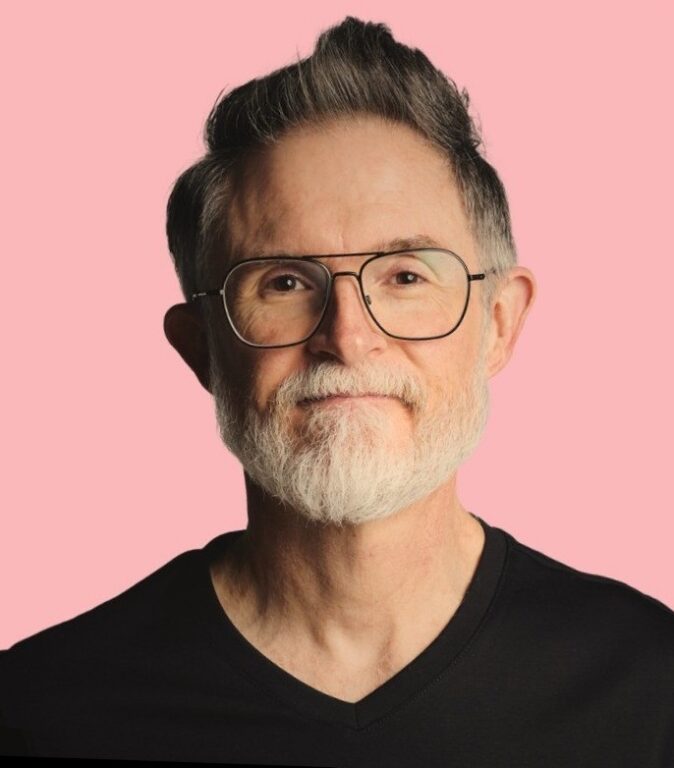
People Before Things
Chris Laping · RizeX Monthly Mastermind · Eastern Idaho
Seventy percent of all organizational change fails — and it’s not because the strategy was wrong or the technology was bad. Chris Laping, four-time CIO and bestselling author of People Before Things, walked the room through the real reason change stalls: leaders forget that change is a human experience before it’s a business initiative. At Red Robin, his team took the company from an $8 stock to $89 by getting this right.
For small business owners building teams and making pivots, the question isn’t whether change is coming — it’s whether your people will be with you when it does. Chris laid out the framework he’s used across Fortune 500 companies and fast-growing organizations to make that happen.
What Chris covered
The rollercoaster principle. Chris opened with a story from Disney World’s Aerosmith Rock and Roller Coaster — a ride that goes from zero to 57 miles an hour in two seconds. Even after standing in line for two hours watching it happen, even after riding it once and knowing exactly what was coming, it still took his breath away the second time. That’s change at work. You can tell your team something is coming, walk them through every detail, give them every heads-up — and when it actually happens, it still catches them off guard. That’s not resistance. That’s human wiring. Leaders who understand that stop treating pushback as a character flaw and start treating it as a design challenge.
Smart vs. healthy. Drawing on Patrick Lencioni’s The Advantage, Chris made a distinction that reframes most business problems. Companies have to be both smart (strategy, finance, operations, technology) and healthy (minimal politics, minimal confusion, crystal clear clarity). Smart is table stakes — everyone competing in your market is smart enough. The companies that win are the ones that are healthier. And when Chris asks thousands of leaders what made their best teams great, nobody ever says “we had a great spreadsheet.” They say trust, communication, shared purpose, alignment. Every time.
Alignment isn’t what you think it is. Chris illustrated this with a road trip scenario: two co-founders agree to drive to New York City, assign their team to map the route, and show up to find the team arguing. Why? Because the co-founders never discussed why they wanted to go to New York City — one wanted to see the city for the first time, the other wanted to experience the back roads. Same destination, completely different purpose. That confusion flows downstream. Your team fights about the atlas because they don’t know which why they’re executing. The fix: always lead with why something matters, not just what needs to happen. And “because it will increase revenue” doesn’t count — most people aren’t motivated by profit motives they don’t share in.
Prioritization is the number one reason change fails. In 1973, two Princeton psychologists split seminary students into three groups and sent them across campus to give a talk on the Good Samaritan. On the way, each student passed a man asking for help. Of students who had plenty of time, 63% stopped to help. Students with just enough time: 45%. Students who were already late: 10%. Same values profile across all three groups. What changed wasn’t character — it was margin. Chris has seen this pattern in every organization he’s worked with: CEOs call a change initiative “the most important thing we’ve ever done” and then add it on top of everything else their team is already carrying. If you want change to succeed, you have to take something off people’s plates — not just add to them.
What the room walked away with
Chris’s book People Before Things — which debuted at #2 on Amazon’s hot new releases and has consistently hit the bestseller list — maps out all seven conditions required for healthy organizational change. RizeX members received a copy. The two conditions he walked through in depth were alignment (leading with why) and prioritization (protecting your team’s bandwidth for what matters most).
A moment that landed
Chris was asked to join a payroll initiative at Red Robin — the kind of project that made him want to retire on the spot. He showed up to the kickoff dreading every minute of it. Then Jacqueline, who ran payroll, explained the why: Red Robin operates in 42 states with different municipalities and ever-changing rules, and they weren’t confident they were paying team members correctly. Chris said it changed everything about how he felt about that project. A payroll system became a values statement. That’s what the right why does — it turns obligation into ownership.
“It’s not the big companies that eat the small. It’s the fast that eat the slow.” — Chris Laping
“When people are happy, that drives success. It’s not the other way around.” — Chris Laping
About Chris
Chris Laping is a four-time Chief Information Officer who spent 16 years leading technology and transformation at companies including Red Robin, GM, and Coffee and Bagel Brands. His book People Before Things has been an Amazon bestseller since its 2016 debut. He was named one of The Economist’s Top 5 Social Business Leaders, and his field work spans hundreds of organizations studying why change succeeds and fails. His answer, consistently: it’s the health of the human system, not the sophistication of the plan.
Join us next month
The RizeX Monthly Mastermind meets every month in Eastern Idaho — an intimate gathering of local business owners, entrepreneurs, and professionals committed to real growth. Every event features a speaker who’s in the trenches alongside you, plus time for meaningful conversation and connection.
Reserve your seat at the next RizeX Mastermind ?