
Stop assuming your team thinks like you.
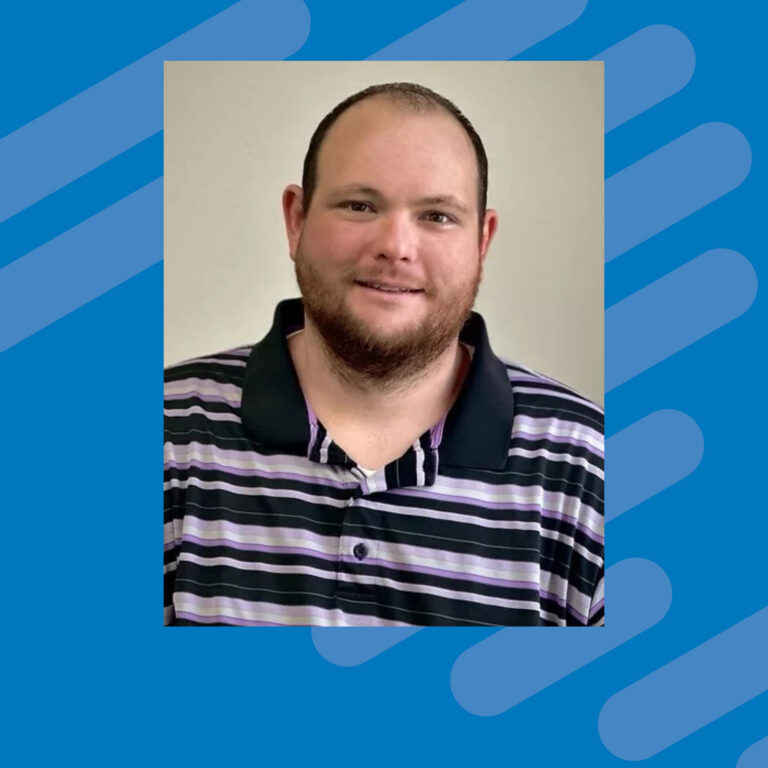
Douglas Colman · RizeX Monthly Mastermind · October 2026 · Eastern Idaho
Almost every business owner has taken a personality quiz, whether on social media, in a job application, or as a four-letter type at a team retreat. Few know what the research actually says. At October’s RizeX Mastermind, Douglas Colman, a personality psychologist turned chief operating officer, brought the science of workplace personality assessments into the room. His first point surprised a lot of people: personality is one of the weaker predictors of job performance.
That matters because small businesses run on small teams, and one misread can turn into weeks of friction. Owners hire, manage, and mentor people who often don’t share their drive, their priorities, or their communication style. Douglas’s goal was to give the room a sharper lens, so that differences become something you can work with instead of a source of conflict.
What Douglas covered
Use the right tool for the right question. In the workplace, personality gets applied in two places: hiring and team dynamics. For hiring, Douglas explained, personality ranks below interviews, work samples, and especially cognitive ability, which is the strongest single predictor of performance. Where personality really earns its keep is in group dynamics: how people communicate, handle conflict, respond to stress, deal with change, and take risks.
Traits vs. values. Traits describe how you tend to operate, and the best-researched model is the Big Five personality traits: conscientiousness, extraversion, openness, agreeableness, and emotional stability. Values describe what you tend to prioritize, such as achievement, autonomy, security, helping others, influence, or stability. The two work together, so two people can behave the same way for very different reasons. Personality is “not a crystal ball,” Douglas said, but it gives you a better read than chance.
The assumed similarity trap. We use ourselves as the baseline for predicting how others will act. When someone doesn’t behave the way we would, we assume something’s wrong, and that’s where conflict starts. Douglas said the shortcut itself isn’t bad. It’s efficient, and “we’re humans. We’re lazy.” The trap is forgetting that it’s a shortcut. A colleague who’s quiet in a meeting may not be disengaged at all. They may be processing, or waiting for a polite opening.
Extremity and context matter more than which side you’re on. Extraversion isn’t better than introversion, and emotional stability isn’t automatically better than its opposite. Problems show up at the extremes. Values work the same way: speed and accuracy are both legitimate, but they compete. That’s why a team with a mix of traits and values usually strikes a better balance than a team of clones.
Observe, reframe, align, adapt. Douglas walked through how to put this to work. Watch behavior in context. Reframe what’s behind it before you assign a motive. Then adapt how you run things. If many of your employees are parents, move the 8:00 a.m. meeting to 9:00 so they can get the kids to school first. Pair people with complementary styles, or put someone near the middle between two people at the extremes.
Popularity isn’t predictive. Douglas’s “pet project” is keeping the Myers-Briggs out of the workplace. Type-based quizzes sort people into buckets instead of placing them on a continuum. Two people labeled “extrovert” can be further apart than an introvert and an extrovert who sit close to the middle. The letters are fun to talk about, he said, but they aren’t the best predictor.
What the room walked away with
Douglas shared his slides, each ending with a one-line takeaway, along with a range of validated assessments from free to premium:
- IPIP (International Personality Item Pool): a free website of validated measures that he used heavily in his own research, modeled on the NEO PI-3.
- Hogan Assessment Systems: pricey, but in his view probably the best option for measuring both personality and values in the workplace.
- Cognitive ability tests, such as the Wechsler: expensive, and they usually require a trained outside administrator.
He also gave a few ground rules. Use measures that report multiple dimensions, never a single score. Confirm you’re licensed to use a measure for business purposes. For high-stakes decisions like executive hiring, get professional interpretation and make sure the measure is relevant to the job. When someone in the room asked whether personality can be molded to fit a company’s culture, his answer was that the research says it isn’t very moldable at all. Lasting change usually comes only from major life events.
A moment that landed
The employee who keeps asking for more detail isn’t stalling. Douglas described a familiar standoff: a team member keeps asking for exact parameters and success criteria, while the owner keeps saying, “Just go and do it.” The owner, high in openness, thinks they’re giving creative freedom. The employee, highly conscientious and focused on accuracy, just wants to get it right. Neither one is wrong. Once you see the mismatch, the fix is simple: give clearer success criteria, and you both get what you want.
“Different behavior from others does not necessarily equal malintent or bad intent.” — Douglas Colman
“Popularity does not equal predictive.” — Douglas Colman
About Douglas
Douglas Colman is chief operating officer of A New Hope, a Pocatello-based provider of developmental disability services for children and adults. Before that, he spent years in academia: he earned a PhD in experimental psychology at Idaho State University and taught as a psychology professor, researching how accurately people judge each other’s personalities. This was his first presentation since leaving academia, and he brought researcher-grade rigor to the everyday people questions every Eastern Idaho business owner faces.
[Watch the replay ?] Connect with Douglas ?
Join us next month
The RizeX Monthly Mastermind meets every month in Eastern Idaho. It’s an intimate gathering of local business owners, entrepreneurs, and professionals committed to real growth. Think of it as an Idaho Falls business mastermind where the Eastern Idaho business community brings real challenges to the table and leaves with tools to solve them. Every event features a speaker who’s in the trenches alongside you, plus time for meaningful conversation and connection.
Reserve your seat at the next RizeX Mastermind ?